Your coding agent can build on 0G now
Block #02
Block #02 covers Sep 3 to Sep 28. The team was heads-down in Singapore getting ready for Dev Day, and a lot shipped anyway.
One line sets your coding agent up for 0G
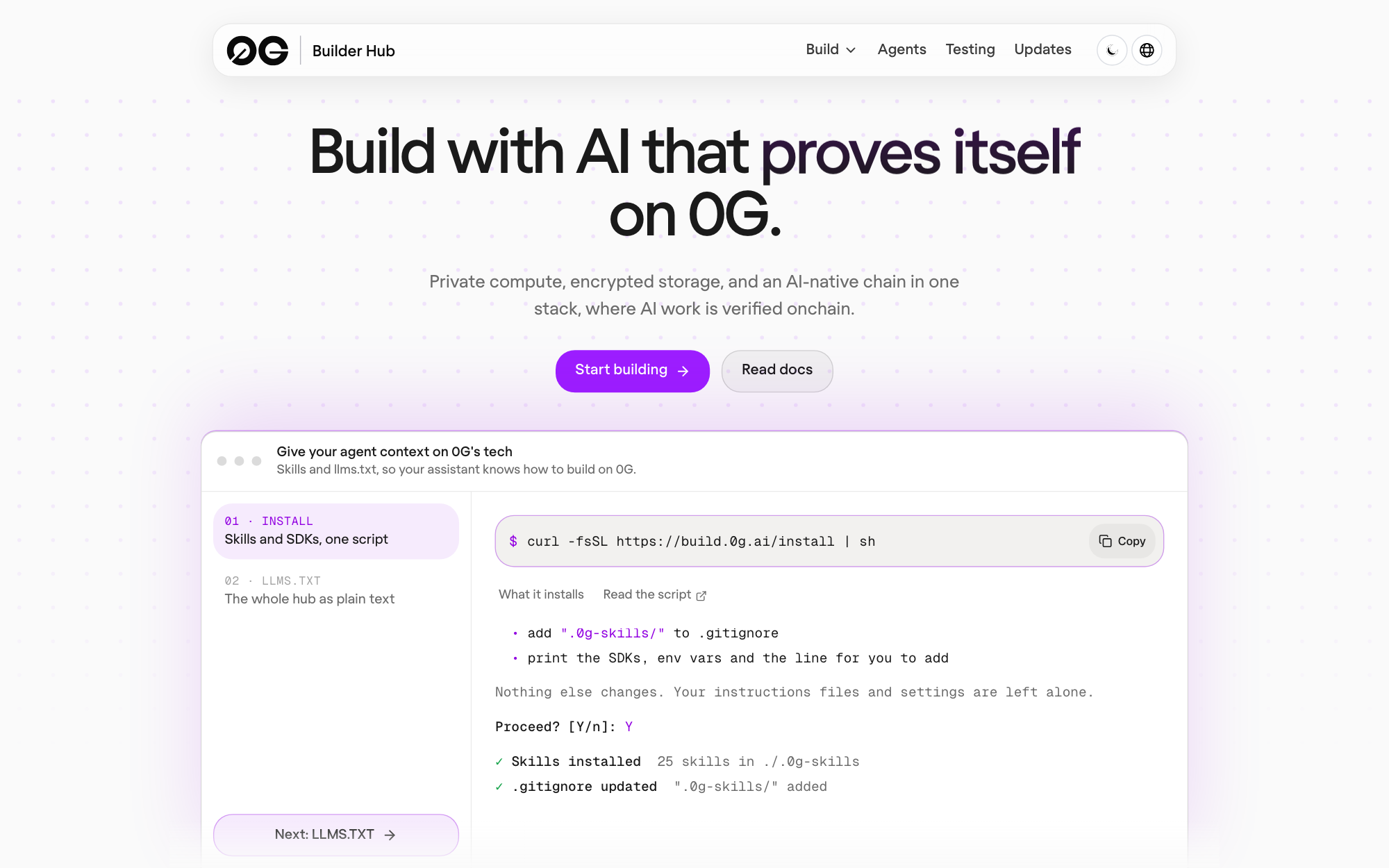
Run curl -fsSL https://build.0g.ai/install | sh in your project. It asks which assistant you use and which parts of 0G you're building on, shows you the plan, and waits for your go-ahead. It then clones 25 agent skills into ./.0g-skills (Storage, Compute, Chain, Agentic ID, plus Private Computer setup for Claude Code) and prints the SDK install line and .env keys you need. It never touches your CLAUDE.md, rules files or settings, and we rebuilt the Builder Hub homepage around it.
130 models behind one API key
The Private Computer catalog went from 64 to 130 models in a week. GPT, Gemini and Claude are now available alongside Qwen, GLM, DeepSeek and Baidu's ERNIE family, all on the same key and balance. Embeddings landed too: qwen3.7-text-embedding takes a single input of up to 128K tokens and only bills input, at $0.0735 per 1M, so your RAG stack doesn't need a second provider.
GLM-5.3 now runs sealed in TeeML
Z.ai's latest flagship took over the Private tier from GLM-5.2. It runs fully inside a TEE enclave where neither 0G nor the provider can read your prompts. If you were pinned to glm-5.2 in Private mode, migrating is one line: change the model name to glm-5.3.
The public RPC got a lot closer to you
We rebuilt the 0G public RPC, and it's now geo-routed across 7 regions with HTTP/2 and WSS. eth_call latency dropped from 290ms to 24ms in São Paulo, 248ms to 26ms in Frankfurt and 231ms to 34ms in Sydney. A typical dapp page load from Europe went from 2.4s to 0.3s.
Your users can bridge in from six chains
0G Hub went live on Sep 22. Users can bridge in from Ethereum, Solana, Base, Arbitrum, BNB Chain and Robinhood Chain, swap on 0G, and find apps to use on the Discover page. If you've been writing your own "how to get funds onto 0G" guide, you can send users here instead.
Two demo days, 24 teams
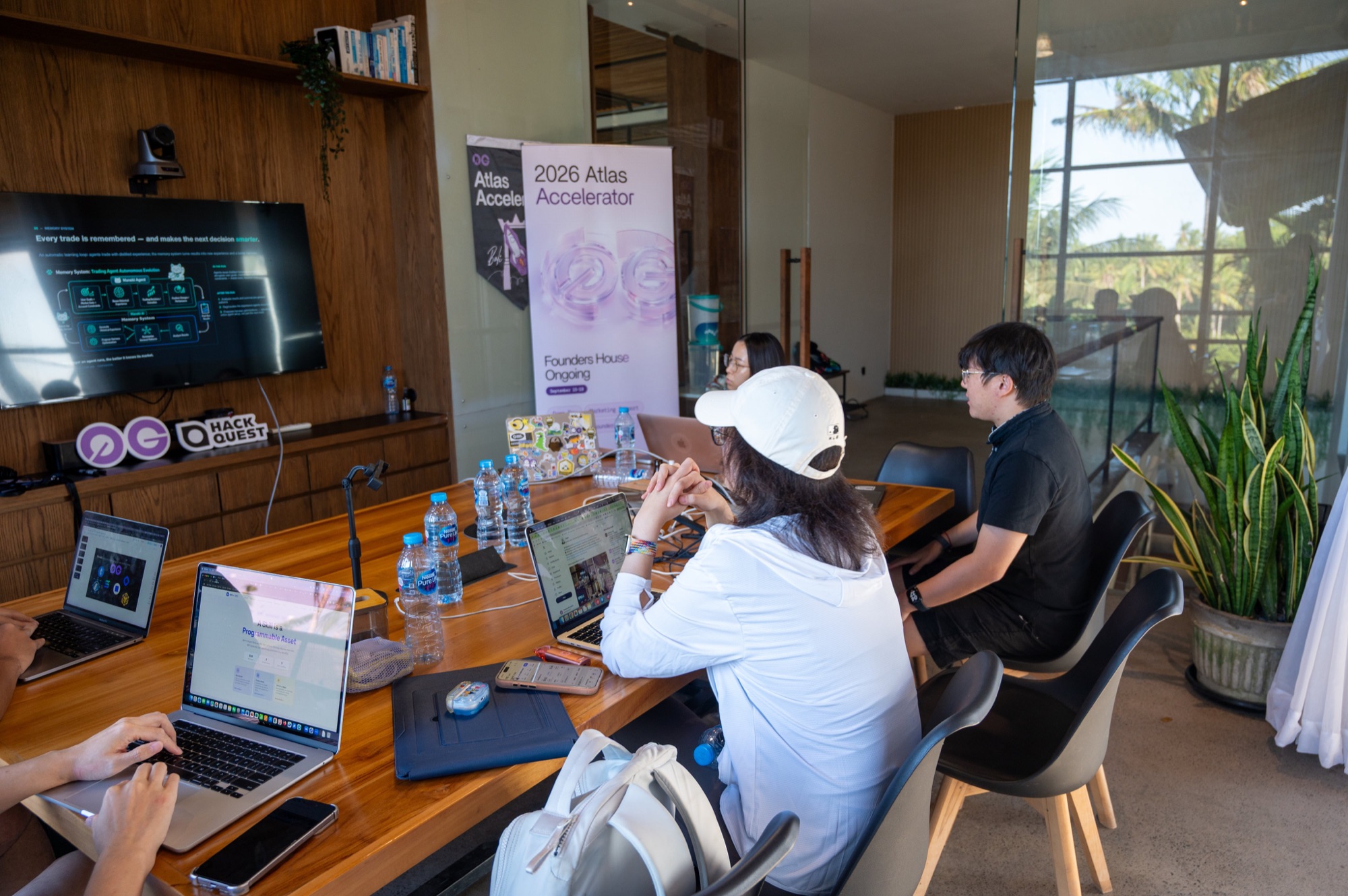
Taipei fit a full hackathon into one day at Tempo House: morning workshops, a 3-hour build sprint and 13 working demos on stage by evening. A week later, 11 teams from the 0G Atlas Founder House cohort, run with HackQuest, demoed agent-economy builds live, from trading agents and skill markets to payment rails and agent memory.
Pulsar Money and Ask Max run their AI on 0G
Pulsar Money runs its in-app financial models on 0G Private Computer, so each response carries proof of which model ran and where. On whale.dance, Ask Max stores every conversation on 0G Storage as the user's own asset and runs inference on 0G Compute, and 0G keeps no prompts or responses.